You might be looking for ready-to-rent warehouses, and perhaps trying to find a medical warehouse for rent but storing medical products or even food has specific standards to ensure product safety.
Certain conditions must be available in warehouses, which may affect the rental cost, such as temperature and humidity control. So, what are the types of warehouses for rent? What factors determine the cost? And when do you need a warehouse licensed by the Food and Drug Authority?
Warehouse Rental Options for Different Business Needs
The types of warehouses available for rent are divided into several considerations, such as:
By Ownership and Management
- Public Warehouses: Owned by third-party logistics providers (3PLs), these warehouses provide temporary storage space for multiple companies.
- Private Warehouses: Owned and operated by a single company to meet its own storage needs.
- Contract Warehouses: Owned by a third party, but operated by the client company under a contract.
By Function and Specialization
- Distribution Centers: Focus on quickly moving goods to retailers, with the minimum possible long-term storage.
- Cold Storage Warehouses: Temperature-controlled facilities for storing perishable goods.
- Smart Warehouses: Rely on advanced technology and automation.
- On-Demand Warehouses: Flexible, short-term storage space.
- Hazardous Materials Warehouses: Designed to store hazardous materials in compliance with applicable safety regulations.
What Are the Factors Affecting Warehouse Rental Costs?
Some factors affect the cost of renting warehouses, such as:
1. Space (Meter or Pallet)
Size is the first factor in determining cost, and perhaps the most important if other factors remain constant; as the cost will be determined more based on the storage capacity you need. Therefore, before renting a warehouse, you must know:
- The required storage capacity and ceiling height.
- Sufficient space for movement and operations.
- Future expansion possibilities.
2. Proximity to Airports and Ports
Furthermore, the proximity of the warehouse to the airport, seaport, and markets affects rental costs. Usually, the closer it is, the more commercially beneficial it is for the company because it simplifies its logistics and makes it more cost-effective.
Therefore, this proximity is taken into consideration when determining the rental value, and its value is likely to increase the closer the warehouse is to those locations
3. Type of Storage
Specialized warehouses, such as cold storage warehouses, are usually higher in cost compared to others due to the equipment required to preserve goods and protect them from damage.
4. Additional Factors
Such as the availability of safety and security measures, like surveillance cameras and fire safety systems, all of which affect the rental cost.

Choosing the Right Warehouse Size and Space
As long as you are looking for warehouse space for rent, you should first determine the appropriate space according to the company’s activity and inventory size. Below are approximate figures for each project:
| Company Type | Appropriate Size (Square Meters) | Height (Meters) | Ideal For |
| Individual business or small e-commerce | 1,000 – 5,000 | 4 – 5.5 | Order fulfillment by a single operator or small team, low SKU count, or manually packed orders |
| Growing e-commerce business | 5,000 – 20,000 | 6 – 7.3 | Multiple picking/packing stations, SKU expansion, and seasonal inventory fluctuations |
| Light manufacturing/assembly | 10,000 – 50,000 | 5.4 – 7.3 | Raw materials, plus processing final goods |
| Medium-sized regional distribution | 50,000 – 150,000 | 8.5 – 9.7 | Regional inventory replenishment, maintaining moderate productivity, or dealing with multiple dock doors |
| Large-scale or national distribution | 150,000 to over 500,000 | 9.7 – 12 | Large-scale fulfillment, automation, and high-volume transportation systems |
When Do You Need a Warehouse Licensed by the Food and Drug Authority?
You may need warehouses for rent licensed by the Saudi Food and Drug Authority (SFDA) in the case of storing pharmaceutical or food products; as the Authority stipulates certain storage standards for them, ensuring their safety during storage until they reach the markets.
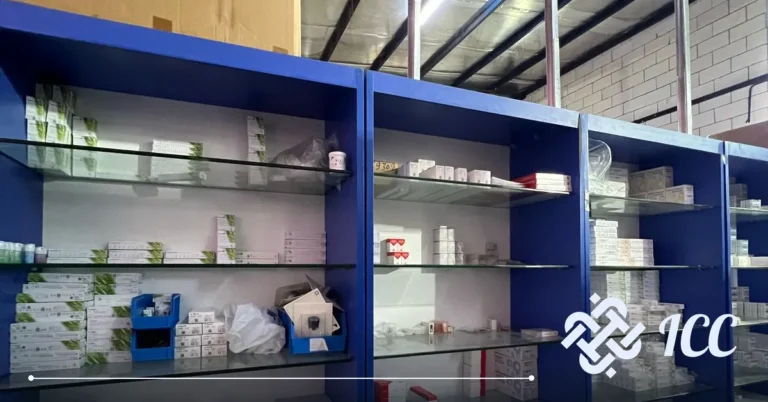
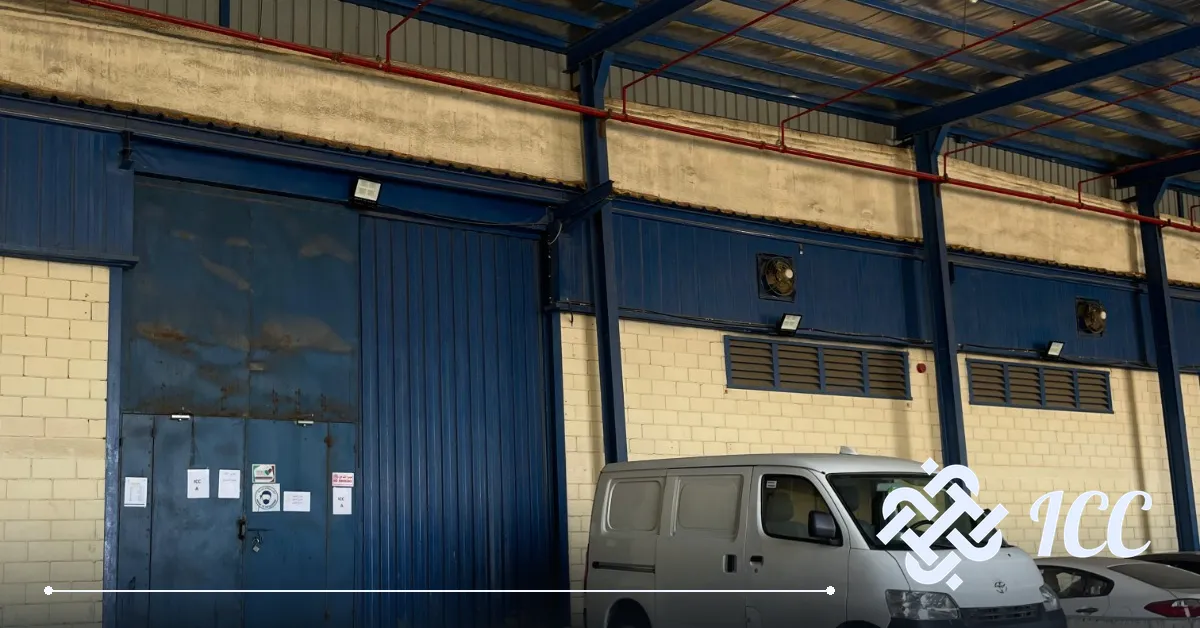
ICC owns warehouses licensed by the SFDA, specializing in the storage of food, cosmetics, and medical devices. It also provides flexible storage spaces according to your business needs, reaching 1,000 square meters and more. Our warehouses are characterized by:
- Temperature and humidity control, ensuring the safety of your products during storage and shipping.
- Accurate electronic inventory monitoring systems.
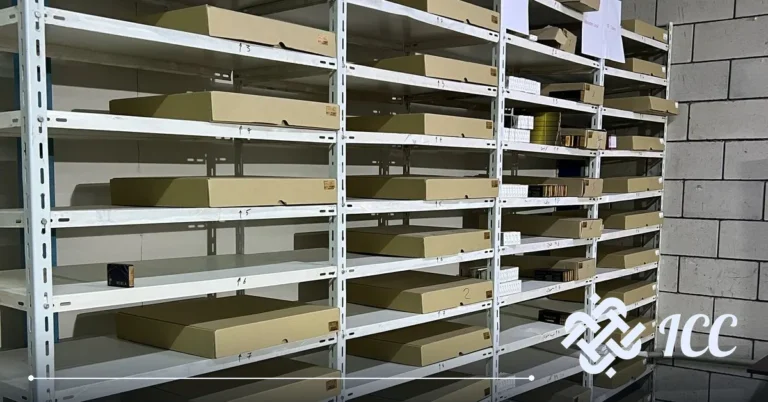
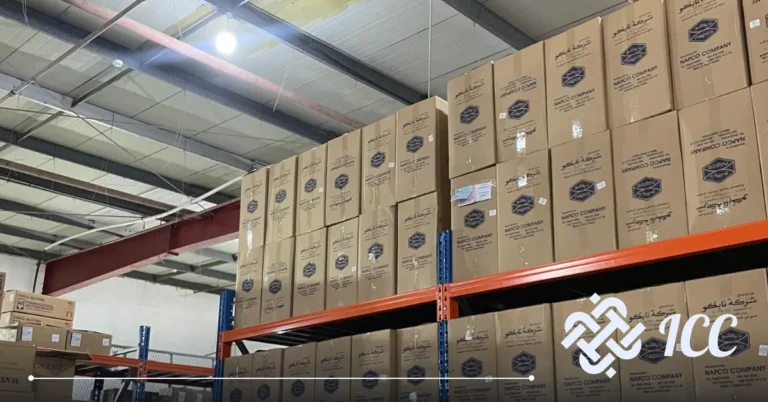
- Effective space organization through pallet storage, ensuring ease of handling products as well as protecting them from damage.
- Advanced security and monitoring systems.
Monthly, Short-Term, and Flexible Warehouse Rental
At ICC, we provide flexible storage spaces according to your business needs, ranging from one square meter to 1,000 square meters and more. Whether you need pallet storage or even enclosed rooms, ICC provides multiple options to suit all your needs.
Checklist Before Renting Warehouse Space
Whether you found a small warehouse for rent or large warehouses for rent as well, there are some things you should pay attention to before renting:
- Does the warehouse suit your inventory requirements?: Not just in terms of space, but additional features according to the nature of the products, such as temperature control to protect goods from damage.
- Included equipment: Some warehouses are equipped with fulfillment service (picking, packing, and inventory management), but in some cases, the lessee may request an empty warehouse so they can invest in all the equipment themselves.
- Is there enough space?: Check the space to ensure you have room to move safely inside the warehouse, including a clear receiving and distribution area, as well as checking the ceiling height.
- Can delivery trucks access the location easily?: The warehouse must have access routes large enough for large trucks.
- What is the floor load limit?: Also check the floor load limit to see if it is sufficient for your products and equipment.
Frequently Asked Questions
What is The Difference Between an Industrial Warehouse and a Licensed Warehouse?
engineering and technical auditing, and that the storage of products, such as food, cosmetics, and medical devices is carried out with the highest safety standards in accordance with the Authority’s guidelines.
As for the general industrial warehouse, it is not designated for regulated products, but other products, such as raw materials, can be stored in it without the need for a license from the SFDA.
Can Warehouse Space be Rented by Area or Pallet?
Yes, the warehouse can be rented by the meter or by the pallet, ensuring that the space is perfectly suited to your needs.
Can I Rent a Small Warehouse for Short-term Storage?
Yes, a small warehouse can be rented monthly, providing all the features and systems you need, such as temperature control.